Dental Health · Seattle Allergy Season
It's peak pollen season in Seattle. Your upper teeth ache. Is it your sinuses — or a dental problem? Here's how to tell, and when to see a dentist.
·
Moritis & Shin Dentistry, Downtown Seattle
·
6 min read
 If you're a Seattle resident dealing with upper tooth pain right now, there's a good chance it's connected to your sinuses. May is one of Seattle's peak allergy months — birch and oak pollen are currently at moderate-to-high levels across King County — and allergy-driven sinusitis is one of the most commonly overlooked causes of tooth pain. But the relationship also runs in reverse: a dental infection in an upper back tooth can actually cause sinusitis, even when your nose feels fine.
This post explains both directions, how to tell the difference, and when you need a dentist versus a doctor.
Not sure if your tooth pain is dental or sinus-related?
Moritis & Shin Dentistry is in Downtown Seattle. We can examine your upper teeth and rule out a dental cause — often in a single visit. In-network with Delta Dental PPO, Cigna PPO, Aetna PPO, and Regence PPO.
✓ Delta Dental PPO
✓ Cigna PPO
✓ Aetna PPO
✓ Regence PPO
How sinuses and teeth are connected
The maxillary sinuses — the large sinus cavities on either side of your nose — sit directly above the roots of your upper back teeth, specifically the upper premolars and molars. The roots of these teeth are often only millimeters away from the sinus floor, and in some patients they protrude slightly into the sinus cavity itself.
This close anatomical relationship explains why problems in one area so often feel like problems in the other. Pressure from inflamed sinuses pushes down on the tooth roots. Infection from a diseased tooth root can spread upward into the sinus. The nerves in the area don't always signal clearly which side the problem originates from — which is why even experienced clinicians sometimes need imaging to tell the difference.
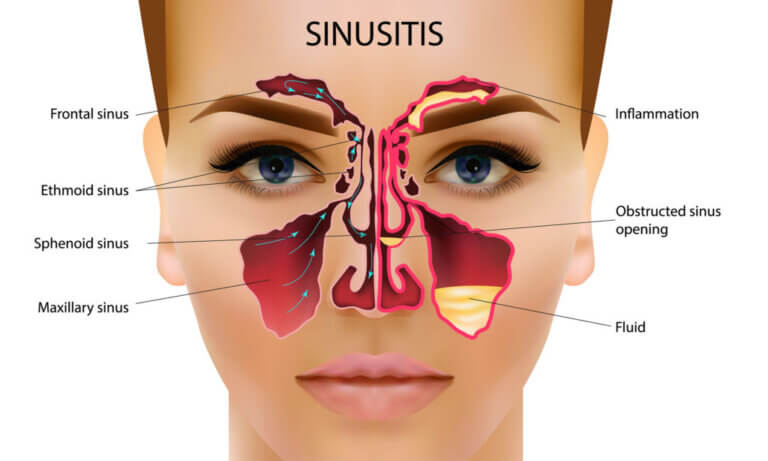
| Direction 1 | Sinusitis → tooth pain. Inflamed sinuses press on upper tooth roots, causing aching and pressure that feels exactly like a toothache. |
| Direction 2 | Tooth infection → sinusitis. An infected upper molar or premolar can spread bacteria directly into the sinus cavity — causing sinusitis with no allergy or cold as the trigger. |
Direction 1: sinusitis causing tooth pain
This is the more common scenario — especially right now during Seattle's allergy season. When your sinuses become inflamed from allergies, a cold, or a sinus infection, the swelling and fluid buildup in the maxillary sinuses creates pressure that radiates down into the roots of your upper teeth.
Signs that your tooth pain is likely sinus-related:
| Multiple upper teeth ache at once | Dental problems almost always affect one tooth. Sinus pressure affects several upper back teeth simultaneously. |
| Pain is worse when bending forward | Leaning forward increases sinus pressure, intensifying referred pain in the teeth. This is a classic sinus sign. |
| Pain affects both sides | Dental issues are nearly always one-sided. Bilateral upper tooth aching strongly suggests sinus involvement. |
| You have other sinus symptoms | Nasal congestion, post-nasal drip, facial pressure, or reduced sense of smell alongside tooth pain points to sinusitis. |
| Teeth look and feel otherwise healthy | No visible decay, no cracking, no sensitivity to hot or cold — only pressure sensitivity. Sinus is a likely culprit. |
| Pain improves with decongestants | If tooth pain eases after taking a decongestant or antihistamine, that's a strong indicator it's sinus-driven. |
If most of these apply to you, the primary treatment is managing your sinusitis — through antihistamines, nasal sprays, decongestants, or seeing your doctor for a sinus infection. The tooth pain should resolve once the sinus inflammation does. That said, if the pain persists after your sinus symptoms clear, see a dentist — it's possible to have both a sinus problem and a dental problem simultaneously, with one masking the other.
Direction 2: tooth infection causing sinusitis (odontogenic sinusitis)
This is the direction most patients — and even some physicians — don't know about. Odontogenic sinusitis means sinusitis caused by a dental infection. It accounts for an estimated 10–40% of chronic sinusitis cases, many of which go undiagnosed for months or years because neither the patient nor their doctor considers the teeth as the source.
When an upper back tooth develops an abscess or a failed root canal, bacteria can spread through the thin sinus floor directly into the maxillary sinus. The result is a persistent sinus infection that doesn't respond to antibiotics or standard sinus treatment — because the source of infection is the tooth, not the sinus.
Signs that your sinusitis may actually be a dental problem:
| Sinusitis on only one side | True allergic or viral sinusitis usually affects both sides. One-sided sinus symptoms — especially on the same side as a problematic upper tooth — is a red flag for odontogenic sinusitis. |
| Sinusitis not responding to antibiotics | Multiple rounds of antibiotics without lasting relief suggests the infection source may be dental. Antibiotics cannot fix an infected tooth root. |
| Foul smell or taste in the nose | Dental-origin sinus infections often produce a distinctive foul odor different from typical sinusitis, due to the bacterial source from the tooth root. |
| Recent dental work on upper back teeth | A root canal, extraction, or implant near the upper molars can occasionally introduce bacteria near the sinus floor. Sinus symptoms following upper dental work warrant evaluation. |
| History of a failed root canal | A tooth treated years ago can still harbor infection at the root tip — silently seeding the sinus above it with bacteria over time. |
Important: If you have chronic sinusitis on one side that hasn't improved with standard medical treatment, ask your doctor to consider a dental cause. A dental X-ray or CBCT scan can identify an infected tooth root near the sinus that standard sinus imaging may miss entirely.
Chronic sinus issues that won't clear up?
We can examine your upper teeth and take targeted X-rays to rule out a dental source. In-network with Delta Dental PPO, Cigna PPO, Aetna PPO, and Regence PPO. Financing available for all patients — no credit impact.
Sinus pain vs. tooth pain: the full comparison
| Symptom or clue | Points to sinus | Points to dental |
|---|---|---|
| Multiple upper teeth ache | ✓ | |
| Pain in one specific tooth | ✓ | |
| Pain worsens bending forward | ✓ | |
| Sensitivity to hot or cold | ✓ | |
| Nasal congestion or runny nose | ✓ | |
| Pain improves with decongestant | ✓ | |
| Visible decay or broken tooth | ✓ | |
| One-sided sinus symptoms only | ✓ (dental-origin sinus) | |
| Antibiotics haven't helped sinusitis | ✓ (dental-origin sinus) | |
| Symptoms started during allergy season | ✓ |
What Seattle allergy season means for your teeth right now
May is one of Seattle's peak allergy months. Birch and oak tree pollen are currently at moderate-to-high levels in King County, and many residents are already experiencing allergy-driven sinusitis — congestion, facial pressure, and post-nasal drip. If you've noticed your upper back teeth aching over the past few weeks without an obvious dental cause, seasonal sinusitis is a very plausible explanation.
The good news: if allergy-driven sinus pressure is the cause, treating the sinus issue with antihistamines, nasal steroids, or seeing your doctor should resolve the tooth discomfort within days. The concern: if you have an underlying dental problem that's been quiet, allergy season inflammation can push it over the threshold into noticeable pain — meaning it was already there and needs treatment regardless of the season.
Bottom line: if your upper teeth are aching right now and you have nasal symptoms, start with allergy or sinus management. But if the pain persists after your sinus symptoms resolve — or if you have sensitivity to cold, visible decay, swelling, or pain localized to one tooth — get a dental exam promptly.
Frequently asked questions about sinus and tooth pain in Seattle
Can sinusitis cause tooth pain?
Yes. The maxillary sinuses sit directly above the roots of the upper back teeth. When sinuses become inflamed — from allergies, a cold, or a sinus infection — the pressure causes aching and sensitivity in multiple upper teeth simultaneously. This is called referred pain and is very common during Seattle's spring allergy season, when birch and oak pollen levels are at their highest.
Can a tooth infection cause sinusitis?
Yes. This is called odontogenic sinusitis, and it accounts for an estimated 10–40% of chronic sinusitis cases. An infected upper molar or premolar can spread bacteria directly through the sinus floor into the maxillary sinus. The resulting sinusitis typically affects only one side and does not respond to antibiotics because the source is dental, not respiratory.
How do I know if my tooth pain is from my sinuses or a dental problem?
Sinus-related tooth pain typically affects multiple upper back teeth, worsens when bending forward, and improves with decongestants. Dental-related pain usually affects one specific tooth, may include sensitivity to hot or cold, and does not improve with sinus medication. When in doubt, a dental exam and X-ray can quickly rule out a dental cause — that's often the fastest way to get clarity.
Which teeth are most affected by sinus pressure?
The upper second premolars and upper first and second molars are most commonly affected, as their roots sit closest to or within the maxillary sinus floor. Lower teeth are not affected by sinus pressure — if your lower teeth ache, the cause is not sinus-related.
Why are my teeth worse during allergy season in Seattle?
Seattle's peak tree pollen season runs from February through May, with birch and oak as the dominant contributors in King County. Pollen-driven allergic sinusitis causes swelling and fluid buildup in the maxillary sinuses, increasing pressure on the roots of the upper back teeth. If your upper teeth ache during allergy season but feel fine at other times of year, seasonal sinusitis is a very likely cause.
Should I see a dentist or a doctor for sinus-related tooth pain?
If you have classic sinus symptoms — congestion, facial pressure, nasal discharge — alongside upper tooth pain, start with your doctor or urgent care for the sinus issue. If tooth pain persists after sinus treatment, see a dentist. If you're unsure which is the cause, a dentist can rule out a dental problem with an exam and X-ray — that's often the fastest path to an answer.
Can a root canal fix odontogenic sinusitis?
Yes, in many cases. If odontogenic sinusitis is caused by an infected tooth that can be saved, a root canal and appropriate antibiotic therapy can resolve both the dental infection and the sinus condition. If the tooth cannot be saved, extraction is typically required. In some cases, ENT treatment is needed alongside dental treatment to fully clear the sinus.
Moritis & Shin Dentistry — Downtown Seattle
509 Olive Way, Suite 1520, Seattle WA 98101
Upper tooth pain during allergy season? We can examine your teeth and rule out a dental cause — often in a single visit. New patients welcome. In-house payment plans and interest-free financing available with no credit score impact.
Serving Downtown, Capitol Hill, Belltown, South Lake Union & Pioneer Square.
✓ Delta Dental PPO
✓ Cigna PPO
✓ Aetna PPO
✓ Regence PPO