
If you have older silver fillings, you may have wondered whether it's time to replace them with tooth-colored alternatives. Perhaps the dark metal is noticeable when you smile, or maybe you have started experiencing sensitivity around a tooth that was filled years ago.
Modern composite fillings offer a natural-looking option for repairing teeth affected by decay or damage. But replacing an older filling is not always necessary simply because it is visible. The right decision depends on the condition of the existing restoration, the health of the tooth underneath it, and how much natural tooth structure remains.
At Moritis & Shin Dentistry in downtown Seattle, Dr. Harry Shin uses tooth-colored composite materials designed to restore teeth while preserving as much healthy structure as possible. Here is what to know about older silver fillings and when a replacement may make sense.
Why Might an Older Silver Filling Need to Be Replaced?
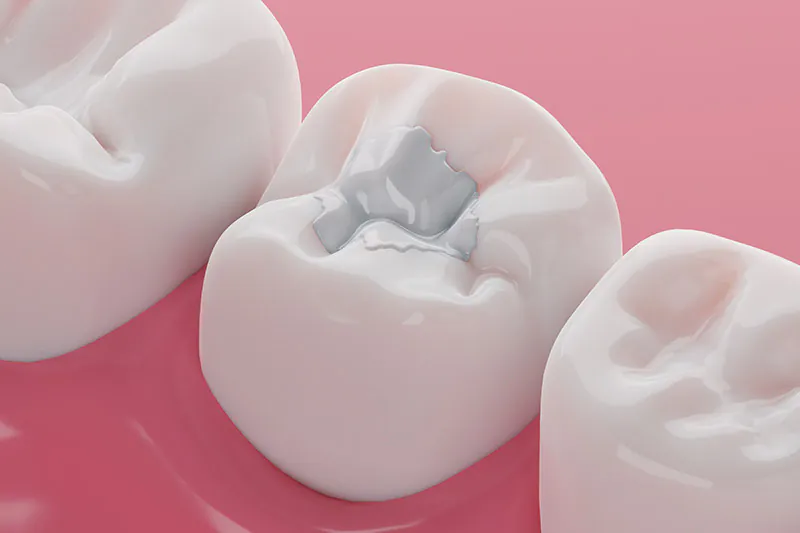 Silver-colored fillings, also called dental amalgam fillings, have been used for many years because they can provide a durable restoration. Like any dental filling, however, an amalgam restoration can eventually become damaged or need attention.
There are several reasons Dr. Shin may recommend replacing an older filling:
- Cracks or fractures: Years of chewing pressure, clenching, or grinding can contribute to cracks in a filling or the surrounding tooth.
- Wear or damage: A filling may become worn, chipped, or loose over time, affecting how well it restores the tooth.
- Decay around the filling: New tooth decay can develop along the edges of an existing restoration or beneath it. A dentist may need to remove the damaged filling and treat the affected area.
- A poor seal or compromised margins: If the edges of a filling are no longer intact, bacteria may be able to reach the tooth beneath it.
- Changes in the tooth: A tooth that has become sensitive, painful when biting, or otherwise uncomfortable may need an examination to determine whether the filling or the tooth itself is damaged.
Not every older filling needs to be replaced. If an amalgam filling is intact and there is no decay beneath it, the FDA does not recommend removing it simply because it contains mercury or looks different from natural teeth. Unnecessary removal can sacrifice healthy tooth structure. Regular dental examinations help determine whether a restoration is still functioning properly or needs attention.
What Are Tooth-Colored Composite Fillings?
Composite fillings are made from a resin material containing fine glass particles. The material can be matched to the natural shade of your teeth, making it much less noticeable than a traditional silver filling.
At Moritis & Shin Dentistry, Dr. Shin uses tooth-colored composite materials to repair cavities and restore damaged areas. Composite offers several potential advantages:
Natural appearance: Composite can be matched to the surrounding tooth, making it a popular choice for patients who want a discreet restoration.
Bonding to the tooth: Composite bonds to tooth structure, helping support the remaining tooth while restoring the damaged area.
Conservative treatment: In many situations, composite can be placed while preserving more healthy tooth structure than would be needed for some other restorative materials.
Versatility: Tooth-colored composite can be used to repair cavities, chips, and certain areas of tooth damage.
Composite does have limitations. It can be more technique-sensitive to place, particularly when moisture control is difficult, and it may not be the best choice for every large restoration or area exposed to heavy biting forces. Your dentist will consider the size and location of the filling, your bite, and the condition of the tooth before recommending a material.
What Happens When an Old Silver Filling Is Replaced?
If Dr. Shin determines that an existing filling should be replaced, the appointment typically begins with an examination of the tooth and the surrounding area. Dental X-rays may also be recommended when needed to evaluate areas that cannot be seen during a visual examination.
The process generally includes:
- Numbing the area: Local anesthetic is used to keep the tooth comfortable during treatment.
- Removing the old restoration: The existing filling is carefully removed so the dentist can evaluate the tooth beneath it.
- Treating decay or damaged areas: Any decay or compromised tooth structure is addressed before the new restoration is placed.
- Applying composite material: Tooth-colored composite is placed in layers and shaped to restore the tooth's natural contours.
- Hardening and polishing: A curing light hardens the composite material, and the filling is polished and adjusted to create a smooth surface and comfortable bite.
After the procedure, the tooth may feel slightly different as you get used to the new restoration. Temporary sensitivity can occur. If discomfort persists or your bite feels uneven, contact the dental office for an evaluation.
When Is a Dental Crown a Better Choice Than a Filling?
A tooth-colored filling is often appropriate when the damaged area is relatively small and enough healthy tooth structure remains to support the restoration. But if a tooth has lost a substantial amount of structure, a filling may not provide enough support.
In those situations, Dr. Shin may recommend a dental crown instead.
A crown is a custom-made restoration that covers the visible portion of a tooth. It can help restore the tooth's shape, strength, and function while protecting weakened areas. A crown may be considered when:
- A cavity or previous restoration involves a large portion of the tooth.
- The tooth has a significant crack or fracture.
- The remaining tooth structure is too weak to reliably support a filling.
- A tooth needs additional protection after root canal treatment.
- An older filling has been replaced several times and little healthy structure remains.
Moritis & Shin Dentistry offers several crown materials, including porcelain, ceramic, porcelain-fused-to-metal, and zirconia options. Dr. Shin considers the tooth's location, functional demands, extent of damage, and appearance when recommending a restoration.
A crown generally requires more preparation than a filling, so it is not automatically the better choice. The goal is to select the most conservative treatment that can adequately restore and protect the tooth.
Are Tooth-Colored Fillings Worth It?
For many patients, composite fillings offer an appealing combination of appearance and function. They can blend with natural teeth and provide a conservative way to restore areas affected by decay or damage.
Still, replacing every silver filling is not necessary. An older restoration that remains intact and healthy may be best left alone. If a filling is cracked, leaking, worn, or associated with new decay, your dentist can explain whether replacement is appropriate and which material makes the most sense.
At Moritis & Shin Dentistry, Dr. Harry Shin takes an individualized approach to restorative care, with an emphasis on preserving healthy tooth structure whenever possible. If you have an older filling you are concerned about, schedule an examination at the downtown Seattle office to discuss your options. Contact us today to get started!